The 3 A.M. Problem
Updated: 3 days ago
Perimenopause changed the way I sleep. After years of trial and error, here's what has helped me find my way back.

I used to sleep like a log. And when I say like a log, I mean practically comatose. Thunderstorms? Slept through them. My dad chasing a would-be car thief down the street? Slept through that too. An overnight earthquake while I was living in Japan? You guessed it. I heard about it on the news the next morning. I'd fall asleep in one position and wake up in exactly the same one, vampire-like, without a crease on the pillow or a ruffle in the sheets.
Then I had babies.
Babies, unsurprisingly, put an end to that particular superpower. There were sleepless nights, middle-of-the-night feedings and for years after that, the slightest creak on the stairs would make my eyes fly open. Raising kids turned me into a lighter sleeper, as I suspect it does most parents. Eventually those years passed, and my sleep settled somewhere between my former corpse-like state and fly-outta-bed-because-the-baby-made-a-peep.
And then I hit my mid-forties. Enter perimenopause.
Wait. There's Something Before Menopause?
I knew about menopause. Menopause was what made my then-50-year-old aunt tear off her woolly jumper in the middle of January, fling open the nearest window and announce to anyone within earshot: “I AM BURNING UP!” Menopause was responsible, as far as I understood it, for the occasional rogue wiry hair I'd spotted on my Grade 5 teacher's chin. Menopause happened to old ladies. From what I could fathom, the only good thing menopause brought was the end of your period.
But there was something that happened before menopause? Perimenopause?
Good Lord, no.
I was about 46 when a collection of strange new bodily experiences started showing up. It took time and a lot of internet sleuthing to learn that many of them were linked to the hormonal transition leading up to menopause. (Oh. Maybe I wasn't dying.) The one that has affected my life most consistently is sleep.

It didn't matter when I went to bed. Ten o'clock. Midnight. Even 2 a.m. Somewhere between 3 and 4 in the morning, my eyes would pop open and my body would behave as though morning had arrived. Wakey wakey, Robin. Time to start the day! Except wait. The day is supposed to start at seven, and I'm supposed to be getting four more hours of sleep!
Welcome to the 3 A.M. Brain
Being awake was only half the problem. My brain apparently considered 3:17 a.m. an excellent time to conduct a comprehensive review of my life:
Did I finish that lesson on rocks and minerals? Did I call that parent back? When does swimming registration open? Did I pay for that hockey tournament? What should I make for dinner? Why can't I lose weight? What is the meaning of life?
On and on it went. Sometimes I'd eventually drift off again, only for the alarm to go off what felt like five seconds later, and I'd drag myself out of bed exhausted and angry.
And I am not one of those people who functions beautifully on five hours of sleep. As a teenager, I could easily sleep ten or twelve hours and still squeeze in an after-school nap, simply because I enjoyed it. I was a world-class napper. My family practically drew straws over who had to wake me, because separating me from an afternoon nap was apparently traumatic for everyone involved. Now? I can be absolutely exhausted and still unable to nap.
“Tired and wired,” my doctor said, looking at me with pity. That combination became very familiar, and the consequences weren't confined to nighttime. During the day I was foggy and sluggish. More irritable. More anxious. Everything felt harder when I was chronically tired.
Eventually, I'd had enough.
So I Asked for Help

My doctor reassured me that sleep disruption is common at this stage of life and offered medication to help me sleep. I wasn't ready to go that route, so I also saw my naturopath. She walked me through sleep hygiene: building a routine that tells your brain and body the day is winding down. Dim the lights. Put away the screens. Read. Meditate. Take a warm bath. Try chamomile tea. She also suggested magnesium glycinate.
Over the years, I've tried different combinations of those suggestions and added a few of my own, and I've figured out what seems to work for me. But here's the important part: even what works for me doesn't work all the time.
Sometimes perimenopause wins.
My Holy Grail: Magnesium Glycinate
Of everything I've tried, magnesium glycinate has become the most consistent part of my nighttime routine. I usually take it about an hour before bed. The first brand I tried gave me terrible heartburn, so I switched to one that agrees with me much better. For me, it brings on that okay, we're shutting things down now feeling.
I want to emphasize the for me part. Magnesium is hugely popular as a sleep supplement, but the research isn't nearly as clear-cut as Instagram would have you believe. Some studies point to a link with better sleep, others don't, and researchers are still calling for better trials. So I'm not prescribing magnesium to anyone. I'm telling you that I notice a difference when I take it.
I also don't think supplement dosage is something to be casual about. Health Canada sets the adult upper limit for magnesium at 350 mg per day, and that limit applies only to magnesium from supplements and medications, not from food. Magnesium can also interact with certain medications. That's worth discussing with your own doctor, pharmacist or healthcare provider rather than simply copying what's in somebody else's medicine cabinet — including mine.

Then I Discovered L-Theanine
L-theanine came later. I was going through a period of enormous work-related anxiety — stress I think I could have handled very differently fifteen years earlier, but that felt almost impossible while riding the hormonal roller coaster. I added L-theanine to my evening routine and, for me, it has been amazing. I take it with my magnesium about an hour before bed. I don't feel drugged or knocked out. I just feel better able to wind down.
Interestingly, the research here looks encouraging too. A 2025 review that pooled 18 trials found people reported falling asleep more easily and sleeping better overall with L-theanine, though the researchers say more work is needed to pin down the right dose and how long to take it. Still, promising isn't the same as proven for everyone.
No, I Don't Want the Chamomile Tea
The chamomile tea sounds lovely. I don't drink it. Because then I'll have to pee, and I already have enough things trying to wake me up at 3 a.m.
One of the simplest things I've learned to do for myself is stop drinking anything about two hours before bed. It's not glamorous wellness advice, but keeping my bladder from joining my hormones in sabotaging my night is a win.
Dinner Matters Too
I generally eat dinner between five and six and don't eat afterward. That works beautifully — provided I've eaten enough during the day. Going to bed genuinely hungry is another excellent way for me to have a terrible night.
So rather than trying to eat as little as possible, I'm paying more attention to getting enough protein and good nutrition throughout the day. I use an app to keep an eye on my macros. More on that in another article because, naturally, I have thoughts.
Cool, Dark and Boring
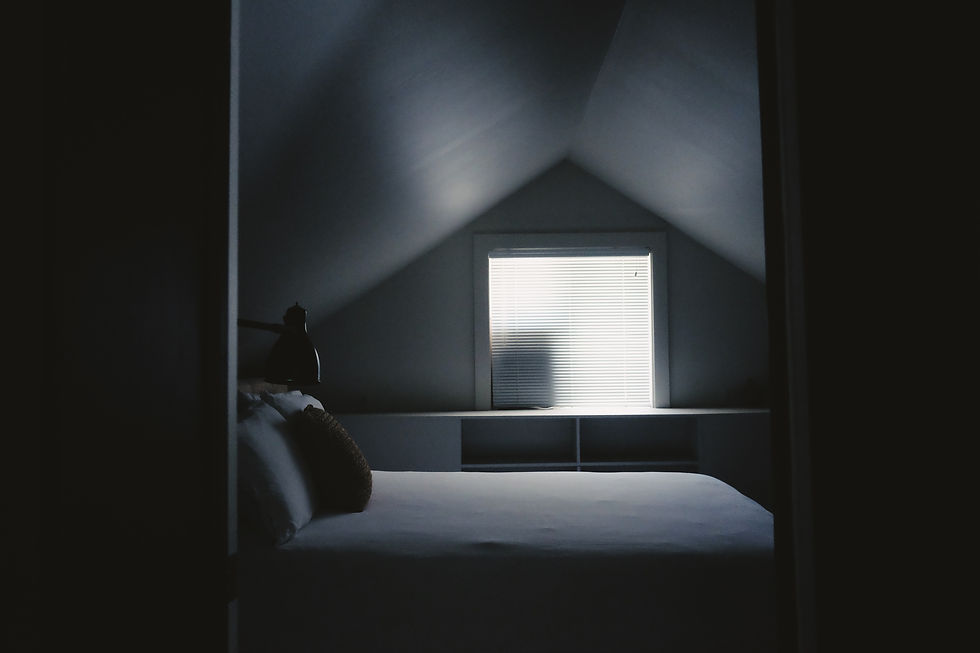
My ideal bedroom temperature is around 20–21°C (68–70°F). Any warmer and I become a steamy mess. I also try to stay off screens for about an hour before bed. Instead, I read — fiction, nonfiction, whatever I'm genuinely enjoying. There's something about disappearing into someone else's story that stops me from endlessly narrating my own.
Not every evening looks like this. Sometimes I'm watching TV later than I meant to. Sometimes life happens. I'm not interested in turning my bedtime routine into a quest for perfection. These are tools, not commandments.
My Sleep Routine Actually Starts in the Morning
One of the more surprising things I've learned is that getting ready for sleep isn't confined to the hour before bed. My daytime habits matter enormously. I strength train about four days a week and walk my dog every day, ideally early in the morning. Exercise gives all that pent-up energy and anxiety somewhere to go, and I'm acutely aware of the difference when I miss it.
As is my poor husband.
And Yes, I Still Wake Up at 3 A.M.
You bet I do. It just doesn't happen every night anymore. For me, it seems to ebb and flow throughout the month. At 52, I'm still having periods, and I've gotten much better at recognizing the nights when my body is simply going to do what it's going to do.
The biggest change may be how I respond when it happens. I used to wake up and immediately get angry. Here we go again. Then came the panic. I have to fall asleep. I have to fall asleep NOW. If I don't fall asleep right now, tomorrow is going to be awful. Unsurprisingly, screaming internally at myself to RELAX AND GO TO SLEEP was not especially relaxing.
I'm much kinder to myself about it now. A bad night is a bad night. Tomorrow I'll get up. I'll take the dog out. I'll move my body. I'll get through the day. And tomorrow night, I'll get back on the horse.
Perimenopause has taught me plenty of things I didn't ask to learn. One of them is that I can't control my body quite as completely as I once imagined. But I can make things easier for it. I can move during the day. Eat enough. Put the phone down. Keep the bedroom cool. Read my book. Take the things I've decided — with professional guidance — are right for me.
And maybe most importantly, I can stop treating being awake at 3 a.m. like an emergency. Because living well isn't always about getting everything exactly right. Sometimes it's about figuring out what helps — and being a little gentler with yourself on the nights when nothing does.
This article reflects my personal experience with perimenopause and sleep and isn't medical advice. Persistent or significant sleep problems deserve a conversation with a qualified healthcare professional.


Comments